The College Board announced on Wednesday, March 5th, their plans for changing the SAT. Saying that the test does not focus enough on the academic skills most important for higher education and the working world, the main changes are the elimination of obligatory essays, removing the penalty for guessing wrong on the provided questions, and cutting obscure vocabulary words from the Reading section that are not applicable or relevant within higher education.
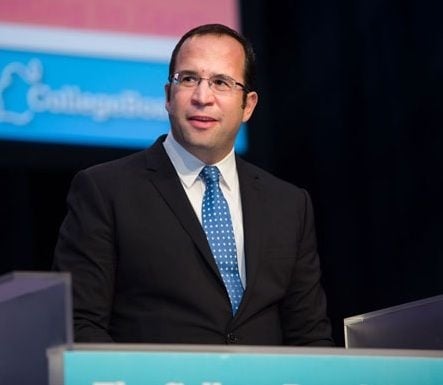 |
| David Coleman, College Board President |
Along with the announcement of the changes to the SAT, Mr. Coleman announced new policy changes for The College Board. First, if a student qualifies, they can receive four fee waivers to apply to colleges, free of charge. They will also be offering free online practice problems from previous tests, along with instructional videos showing how to solve them.
The changes to the SAT are quite extensive. Beginning with the reading section, the vocabulary used will be shifted to what College Board considers to be "rarefied" to words that are common in the college setting. The math questions, once varying over a litany of different areas and topics, will not be focused on linear equations, functions and proportional thinking. The essay section, once mandatory, will now be an optional portion at the end of the test, along with a separate score. The test will be offered on both paper and on a computer. Finally, the scoring metric will revert back to a 1600 range, where a student's top score on the Math section and the "Evidence-Based Reading and Writing" can be 800, each.

This exam will be released in the Spring of 2016. Are these changes good for the test as a whole? Are these changes that could potentially bring the test in line with what is learned within the average high school? High school testers, along with college admissions offices, will make that determination in 2016.